
This article is from the Mail Tribune, in Southern Oregon. See our comments at the end of the article.
Reasonable rules protect rivers
Gold dredging enthusiasts have little to complain about in recently passed legislation limiting mining permits on Oregon rivers and ordering further restrictions to be developed. The bill that eventually passed in the recent legislative session was considerably watered down as it meandered through the lawmaking process.
Rather than a complete moratorium on suction dredging, the measure merely limits dredging permits to 850 — the number issued in 2009, before California declared a moratorium on dredging in that state. Since the California ban, the number of permits issued in Oregon has increased dramatically.
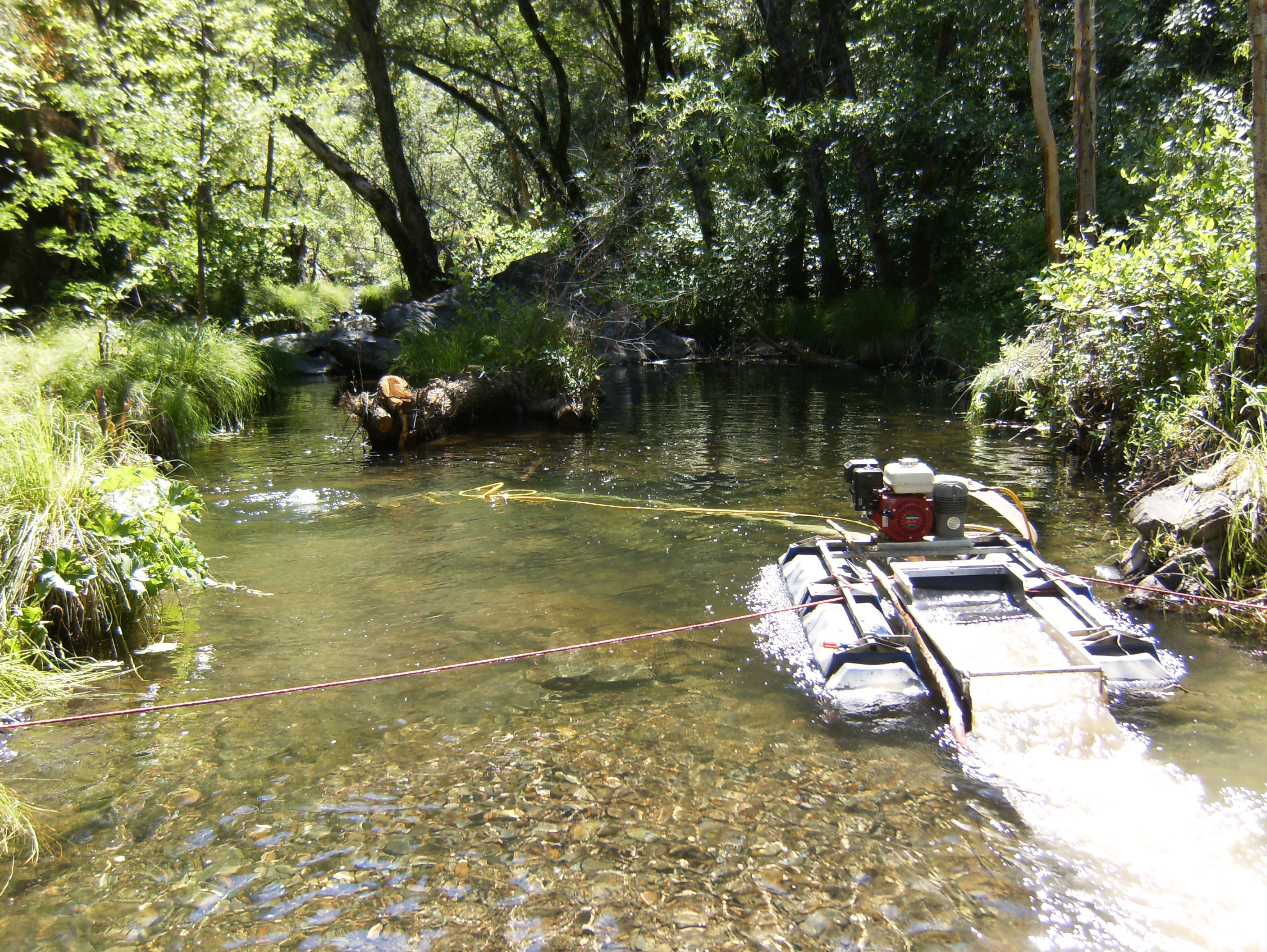
Suction dredging involves operating gasoline-powered motors that vacuum up gravel and silt from riverbeds and sift out any gold that may be present before returning the gravel to the river. Salmon and other fish spawn in the gravel, and increased turbidity from dredges reduces water quality.
Miners argue they already are prohibited from dredging during the months when salmon are spawning, which is true. They also argue that dredging improves the riverbed by removing lead, mercury and other contaminants — a claim with less to back it up.
Aside from the effects on fish, which are a real concern, dredging increases the risk of gasoline and oil spills and is noisy and unsightly, reducing the enjoyment of rivers by rafters, anglers and hikers. Limiting the number of permits and further studying the effects, as the bill does, is a reasonable response to a growing problem that stops short of an outright ban.
Miners point to federal law that allows mining on public land and refer to their claims as “private property.” Nonsense.
They are allowed to dredge the bottoms of public rivers because of archaic mining laws that haven’t been changed since the 19th century. Moderate restrictions on that activity are reasonable steps needed to protect the rights of everyone else to enjoy unspoiled rivers and healthy fish runs.
OUR COMMENTS:
This article is typical of the false information being fed to the public about suction dredging. They claim “Salmon and other fish spawn in the gravel, and increased turbidity from dredges reduces water quality” This claim has been proven to be false on several occasions. Firstly, dredging is not allowed during spawning season. Secondly, two studies have been completed by the Dept of Fish and Game which show conclusively that dredging shows no substantial impact to anadramous fish.
They call the claim of claims being private property nonsense. While it is public land, the courts have already ruled that there are Riparian rights when one owns a mining claim. This gives the owner certain rights similar to private property. This is why we feel the recent moves in California and the water board stating they can charge $1200 for a permit to use a water pump is invalid and illegal.
Most articles like the one above are written by the “Center for Biological Diversity” and they are funded by huge Progressive groups with the intent on keeping the public out of public lands, regulate every aspect of access to those lands and deny people the minerals contained therein.
There is a tidal wave lawsuits being filed in OR and CA right now under the endangered species act, all with the intent to get the agencies who are charged with protecting them to cave, to make concessions and to settle.
They call these “reasonable rules”. There is nothing reasonable about destroying a responsible industry. There is nothing reasonable about telling lies to tarnish a responsible industry.
Join us, we must fight this insanity.